Tribal Outreach
Resilient Agriculture–Water–Community Systems Center of Excellence (RAWCS-COE)
Inclusion of Tribal Communities
The long-term vision of the Resilient Agriculture–Water–Community Systems Center of Excellence (RAWCS-COE) is to advance resilient, self-determined communities through integrated land and water stewardship that respects cultural values, longstanding traditions, and the needs of future generations. This vision will move forward through five key efforts:
- Work alongside communities to identify and address water challenges brought on by a changing climate, recognizing that local knowledge and lived experience are essential to meaningful solutions;
- Support research that grows from community priorities and can be adapted from local to regional scales, ensuring that solutions are practical, culturally relevant, and grounded in shared understanding among community members, researchers, and decision-makers;
- Share knowledge in ways that are accessible and respectful, connecting communities with one another and with partners across the West;
- Invest in the next generation by providing education and training opportunities in water management for youth, students, and agricultural producers; and
- Build a Western Water Network that connects partners to exchange knowledge, strengthen relationships, and support water resilience.
American Indian Tribes are historically and contemporarily integral to water systems throughout the western United States. Within this project, Tribes will be able to engage as key partners in a broader collaborative framework designed to develop adaptive, science-informed, and community-driven land and water management strategies that sustain agricultural productivity, enhance groundwater resources, and promote community well-being.
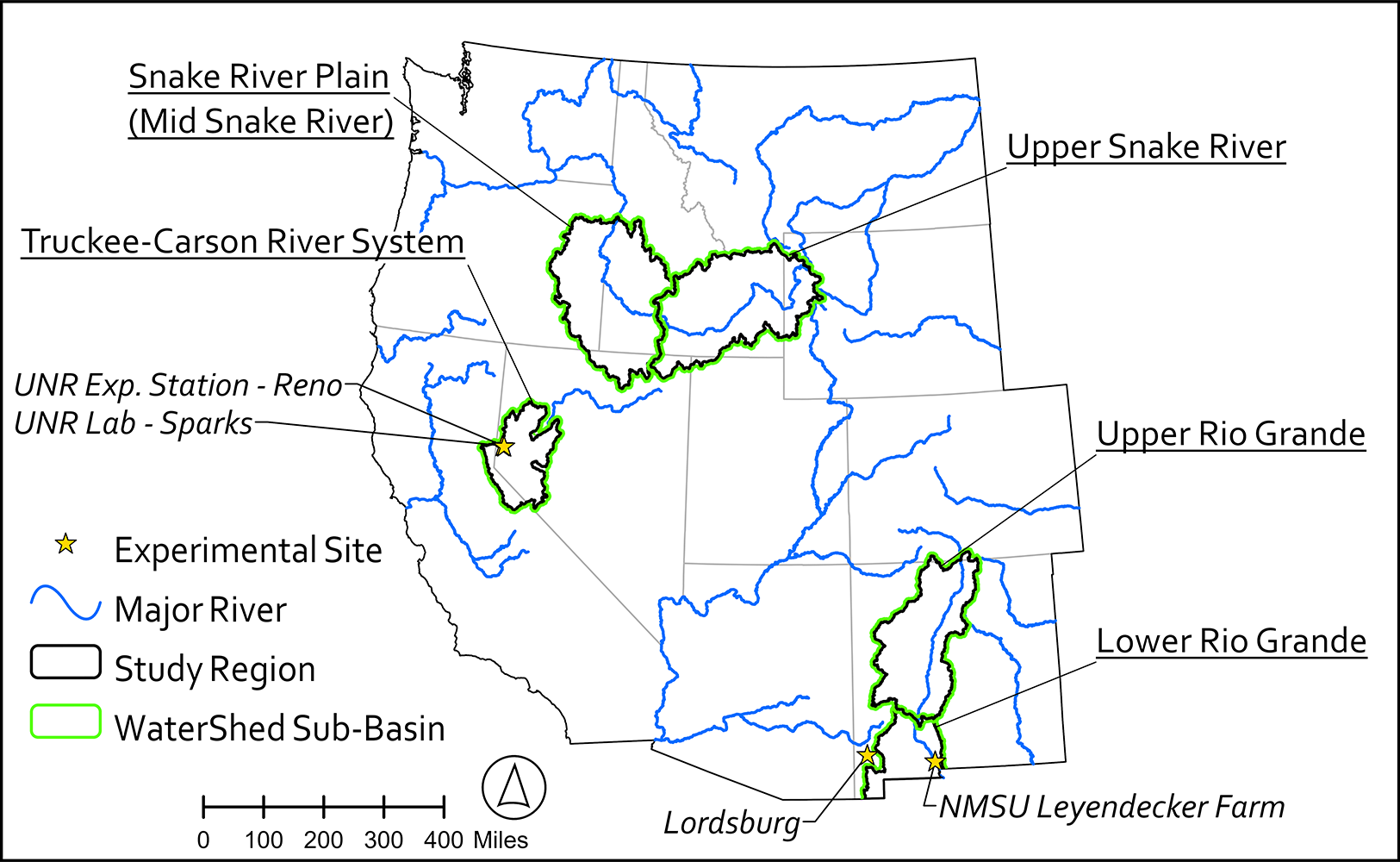
The project directly focuses on three river systems in the West: the Snake, Truckee-Carson, and Rio Grande River Systems. Figure 1 illustrates the five project areas associated with these river systems.
Figure 1: River Systems Specifically Identified with the Project Area
Long description of Figure 1 river systems map
The project includes a dedicated Tribal Outreach Team led by Nevada Tribal Programs within the University of Nevada, Reno Extension. This team brings more than 25 years of experience collaborating with federally recognized Tribes across the western United States on issues related to land, water, and agricultural production. The Tribal Outreach Team will play a central role in integrating Tribal partners into project activities and ensuring that Tribal perspectives and concerns are appropriately addressed throughout project implementation.
The team will engage directly with Tribal governments, Tribal departments, and Tribal agricultural producers to support meaningful collaboration and participation, strengthen partnerships, and foster ongoing communication between the project and Tribal communities. The project recognizes the critical importance of Tribal collaboration in achieving its overall vision and outcomes.
Tribal outreach efforts will include, but are not limited to:
- Delivering project presentations at Tribal conferences and water-related meetings to share information and invite participation;
- Distributing project materials to Tribal natural resource and agricultural departments in the project area;
- Linking Tribal partners to specific project teams within the project framework; and
- Providing an online support system to address questions and facilitate Tribal participation.