Resilient agriculture, river-connected aquifers, and community systems: Transcending water scarcity with western water management solutions
Delivering new research-based tools to communities so they can proactively participate in integrated, sustainable water management for agriculture and other uses, shaped by the needs of the communities themselves.
As part of these efforts, we will be gathering and distributing information through the Western Water Network.
Program Highlights
The Water Resources Research Institute at New Mexico State University initiated this project to transcend water scarcity. We endeavor to solve issues related to water use in river-connected areas, and engage communities in research and outreach. We gratefully acknowledge all of our project partners and funders. This work is supported by the Agricultural Food Research Initiative Sustainable Agricultural Systems project award no. 2025-69012-44233, from the U.S. Department of Agriculture’s National Institute of Food and Agriculture.Progam Contact
Angus Aney
Program Manager
sierra25@nmsu.edu
Robert Sabie
Research Coordinator
rpsabie@nmsu.edu
Alexander "Sam" Fernald
Principal Investigator
afernald@nmsu.edu
Climate change is causing reduced water supplies and greater water demands throughout the western US, putting extreme pressure on agriculture. This project creates conditions for thriving agriculture with less water. A systems approach creates Resilient Agriculture, Water, and Community Systems (RAWCS) models and decision tools.
Types of Research
Community research characterizes collaborative interactions necessary to build long-term, effective relationships between stakeholders and researchers.
Agriculture research improves agricultural water efficiency and profitability at the farm scale coupled with agroeconomic policy analysis at the state and regional scale.
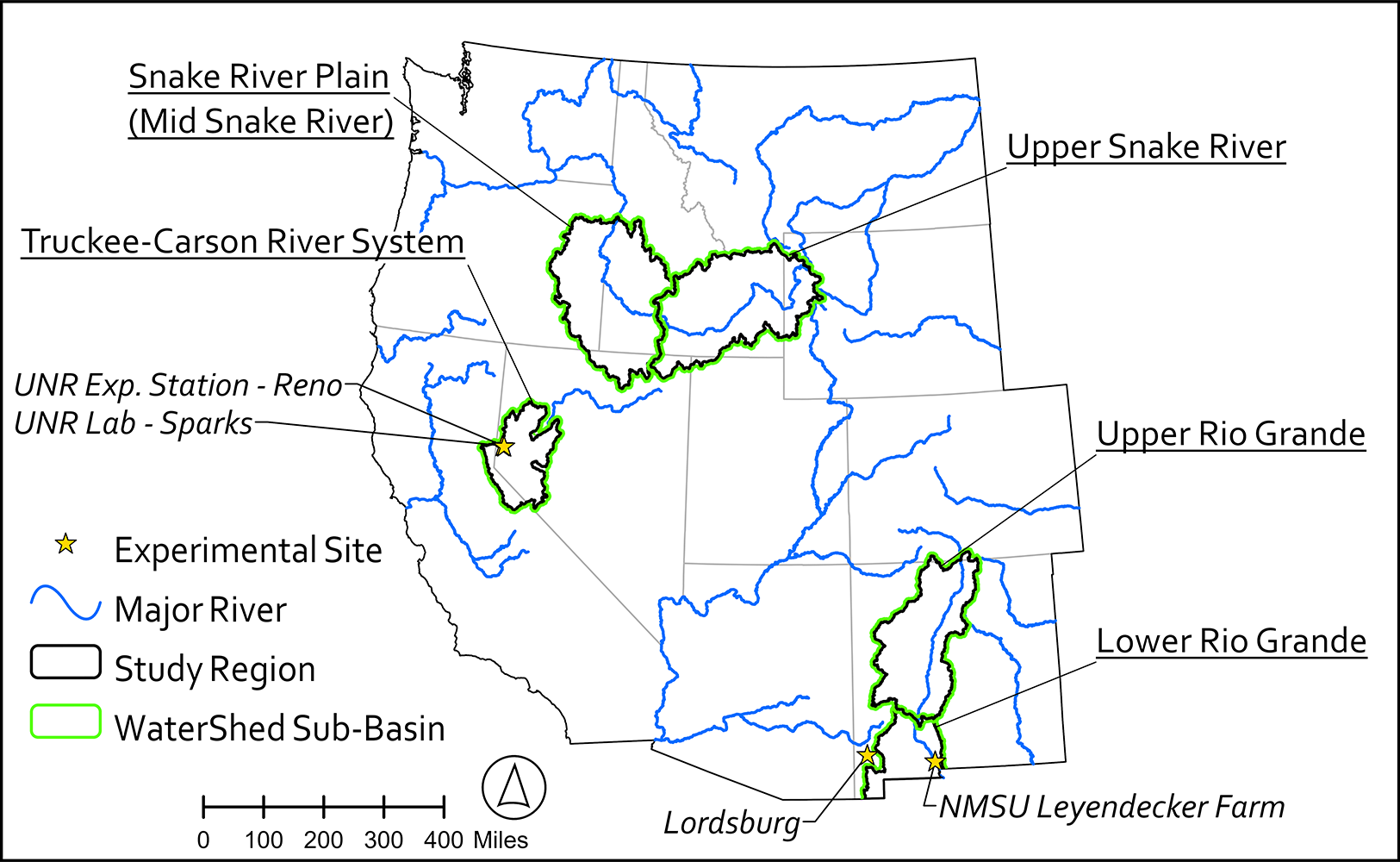
Water research develops data-driven field water budgets at community sites in three states and develops future resilience scenarios using remote sensing and climate projections downscaled to the West.
Outreach
Outreach builds on existing community projects to identify community needs, and Extension delivers new knowledge for resilient futures. Water management education reaches students and stakeholders with targeted videos, water technician training, and an interactive water management game.